A Complete Guide to Choosing the Right AV Installation Services
Table of Contents
- Introduction
- Define Your Project Scope First
- What to Look for in an AV Installation Company
- Services a Full-Service AV Integrator Should Offer
- Technical and Infrastructure Requirements
- Licensing, Insurance, and Compliance
- Understanding AV Project Costs
- Post-Installation Support and Training
- How to Vet and Shortlist AV Installers
- Additional Considerations
- FAQs
- Conclusion
Introduction
Choosing the right AV installation services is one of the most important decisions you will make for your space. A poorly planned project leads to system failures, budget overruns, and technology your team struggles to operate daily. Whether you are setting up a conference room, a classroom, a worship space, or a home theater, the integrator you hire will determine how well everything works long after installation day.
This guide covers every key factor you need to evaluate before signing a contract with any AV company.
Define Your Project Scope First
Before you call any AV integrator, you need clarity on what you are building and why. AV systems vary significantly based on room type, user needs, and intended activities.
Common use cases include:
- Corporate conference rooms using Teams Rooms, Zoom Rooms, or Webex
- Classrooms and lecture halls with displays, microphones, and streaming
- Worship spaces with live audio, cameras, and broadcast setups
- Retail or corporate digital signage in lobbies, airports, or showrooms
- Command centers and control rooms with LED video wall displays
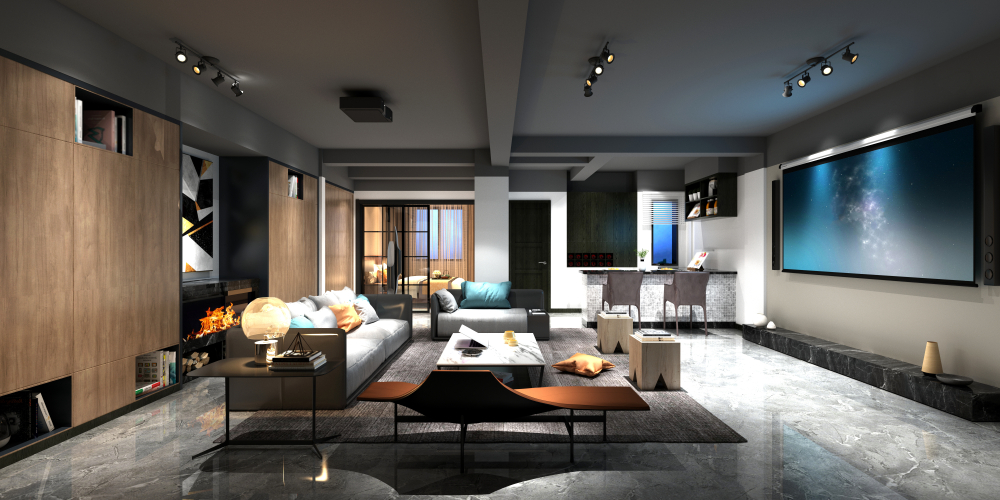
- Home theaters with surround sound and automation
Write down your room dimensions, seating layout, sightlines, primary activities, and whether you want remote system monitoring. Sharing this information upfront helps integrators give you accurate and comparable proposals.
What to Look for in an AV Installation Company

Evaluating AV installation services properly means going beyond the price quote. The factors below are better predictors of project success.
|
Evaluation Factor |
What to Check |
|
Relevant experience |
Case studies or portfolios in your specific sector |
|
Project size match |
Ensure their typical project scale aligns with yours |
|
Widely recognized credential for AV professionals |
|
|
Manufacturer certifications |
Crestron, Extron, AMX, Shure, Zoom, Teams Rooms |
|
Client references |
Ask for two to three clients in your same industry |
|
Online reputation |
Google reviews and industry platforms |
A company's track record in projects similar to yours tells you more than any marketing material. Ask for case studies that show measurable outcomes, such as fewer IT support tickets or faster meeting setup times.
Services a Full-Service AV Integrator Should Offer
The best AV integrators handle the full project lifecycle. If a company only does wiring or only sells gear, you end up coordinating multiple vendors and carrying the coordination risk yourself.
A full-service provider should offer:
- Consultative design covering needs analysis, room acoustics, sightlines, and lighting
- Detailed system drawings, cable schedules, and power or network requirements
- Equipment procurement through vetted vendors or national distributors
- Structured cabling and low-voltage installation, including HDMI, fiber, Cat-6, and Dante audio networks
- System programming and control integration using platforms like Crestron, Q-Sys, or Biamp
- Commissioning and hands-on user training
- Ongoing managed services, remote monitoring, and SLA-backed support
Technical and Infrastructure Requirements
AV systems rely on your building's existing infrastructure. A qualified integrator identifies these dependencies early so nothing surprises you mid-project.
Power and electrical:
Dedicated circuits, surge protection, and proper grounding prevent audio interference and system instability. For new construction or major retrofits, this often requires coordination with an electrician.
Networking and IT:
Video conferencing and streaming require adequate bandwidth, VLANs, QoS configuration, and proper firewall traversal for platforms like Zoom and Teams. If your organization uses Microsoft 365, Google Workspace, or other enterprise tools, the integrator should ensure compatibility.
Room acoustics:
Ceiling height, wall materials, curtains, and flooring all affect microphone performance and sound clarity. Professional integrators often run acoustic modeling or recommend acoustic treatment panels.
Lighting and sightlines:
Glare on displays and obstructed views are common problems that should be caught during the site survey, not after installation.
Licensing, Insurance, and Compliance
This area is often overlooked but it matters. Requirements vary by state, but every AV company you consider should meet these baseline standards:
- General liability insurance and workers' compensation coverage
- A valid business license and contractor registration in your state
- Low-voltage or electrical contractor licensure where required by local code
- OSHA-compliant safety practices for elevated work such as ladders, scissor lifts, and rigging
- Compliance with local fire codes, NEC power-wiring rules, and ADA requirements for cable pathways
Always ask for a copy of their insurance certificate and confirm they are properly licensed in your location before work begins.
Understanding AV Project Costs

AV projects are typically priced using one of three models. Understanding these helps you compare quotes more accurately.
|
Pricing Model |
How It Works |
Best For |
|
Design-bid-build |
Fixed price after a completed design phase |
Well-defined, stable projects |
|
Time and materials |
Billed by hours and parts used |
Fast-track or loosely scoped work |
|
Hybrid |
Fixed base price with change orders for additions |
Projects with some defined and some flexible scope |
Typical cost ranges to expect:
- Single corporate conference room with video conferencing: $8,000 to $30,000
- Mid-size classroom AV setup: $15,000 to $50,000
- Worship space with full audio, video, and streaming: $30,000 to $150,000+
- Digital signage network across multiple locations: $5,000 to $20,000 per location
What to watch for in contracts:
- A written scope of work with a detailed equipment list
- Warranty and support terms, typically one to three years parts and labor
- A clear payment schedule: deposit, progress payments, and final payment after sign-off
- Avoid all-inclusive quotes without line-item breakdowns, as these often hide costs that appear later
Post-Installation Support and Training
Long-term success with an AV system depends on how well your staff can actually use it. This phase is often underestimated during the buying process.
User training
Should cover the full team, including IT staff and power users, not just a single administrator. A system that confuses users generates unnecessary support calls and often goes underused.
Remote monitoring and management
Allows enterprise integrators to watch system health through cloud-based dashboards and resolve many issues without an on-site visit. This can significantly reduce downtime.
Maintenance and SLAs
Should outline scheduled maintenance tasks like firmware updates, cable checks, and software patches. Response time commitments, such as four-hour, eight-hour, or next-business-day SLAs, should be in writing.
Ask whether the company offers a managed services contract or only charges per-incident support. A managed services agreement usually provides better value for organizations where AV systems are mission-critical.
How to Vet and Shortlist AV Installers
Use this checklist when speaking with any AV company:
- Do they hold AVIXA CTS or manufacturer-level certifications?
- Can they provide a portfolio and references for projects similar to yours?
- Do they deliver written design documentation before construction begins?
- Are they properly licensed and insured in your state?
- Do they offer end-to-end services covering design, procurement, installation, programming, training, and support?
- How do they handle IT and network integration for hybrid meetings and streaming?
- What is their pricing model and contract structure?
- Do they offer SLA-based support and managed service options?
If a company hesitates on any of these questions, that is worth noting before you commit.
Additional Considerations
Security and compliance:
Organizations in healthcare must meet HIPAA requirements. Schools must consider FERPA. Any AV system that involves cameras, microphones, or network-connected devices should be reviewed for data privacy risks. Ask how the integrator handles device hardening, firmware updates, and responsible decommissioning of old equipment.
Future-proofing:
Ask how long the proposed equipment will be supported by the manufacturer, whether spare parts are available, and how easily the system can expand. Look for scalable signal distribution, modular control programming, and software update plans that do not require a full system replacement every few years.
Sustainability:
For government agencies, universities, and organizations with environmental commitments, look for energy-efficient displays, Power-over-Ethernet endpoints, and responsible disposal of replaced equipment. Some integrators also incorporate daylight-harvesting design to reduce projector brightness requirements and energy consumption.
Multiple locations:
If your organization has several offices or campuses, ask whether the integrator can standardize designs across sites and offer centralized remote monitoring and support.
FAQs
What are common AV problems after installation?
The most frequent issues include audio feedback or poor microphone pickup, display connectivity failures, software compatibility problems with conferencing platforms, and user confusion due to insufficient training. Many of these can be avoided by choosing an integrator who commissions the system properly and provides thorough onboarding.
How much does it cost to install AV?
Costs vary widely depending on the space and complexity. A single conference room setup typically runs between $8,000 and $30,000. A full worship space or auditorium can range from $30,000 to over $150,000. Factors that affect cost include room size, equipment quality, cabling complexity, programming requirements, and the level of ongoing support included.
Who is the biggest AV company in the industry?
Several large national integrators serve enterprise clients across the country. However, size does not always mean the best fit. Regional and metro-focused firms often offer faster response times, stronger local code knowledge, and more personalized service. The right choice depends on your project scale, location, and support needs.
What qualifications do AV technicians need?
At minimum, look for technicians who hold the AVIXA CTS credential, which is the most widely recognized certification in the field. For more specialized work, manufacturer-specific certifications from companies like Crestron, Extron, or Shure indicate deeper technical training. Licensing requirements for low-voltage work also vary by state, so confirm the technicians working on your project meet local requirements.
Do I need a site survey before getting a quote?
Yes. Any reputable AV company should perform a physical walkthrough of your space before finalizing a proposal. This allows them to measure room dimensions, check power and network availability, assess cable routing, and identify any acoustic or sightline challenges. A quote without a site survey often leads to scope changes and cost increases later.
What is the difference between an AV integrator and an AV installer?
An AV installer typically handles the physical mounting and cabling of equipment. An AV integrator manages the full process including design, equipment selection, programming, system integration, and support. For most commercial and institutional projects, you want an integrator, not just an installer.
Conclusion
Selecting the right AV installation services takes more than comparing prices. It requires evaluating certifications, reviewing past work, confirming insurance and licensing, understanding the full scope of services offered, and planning for long-term support from the start.
RMS Installs help clients navigate every stage of this process. From initial site assessment through installation, programming, training, and ongoing support, we bring the experience and transparency that AV projects demand. If you are ready to start planning your project or have questions about what the right setup looks like for your space, contact us at (470) 456-3108. We are here to help.
Certified partners






Click Here to Fill The Form Online or Call us at:

Business Hours
| Monday | 08:00 AM - 06:00 PM |
| Tuesday | 08:00 AM - 06:00 PM |
| Wednesday | 08:00 AM - 06:00 PM |
| Thursday | 08:00 AM - 06:00 PM |
| Friday | 08:00 AM - 06:00 PM |
| Saturday | 10:00 AM - 05:00 PM |
| Sunday | (Closed) |