
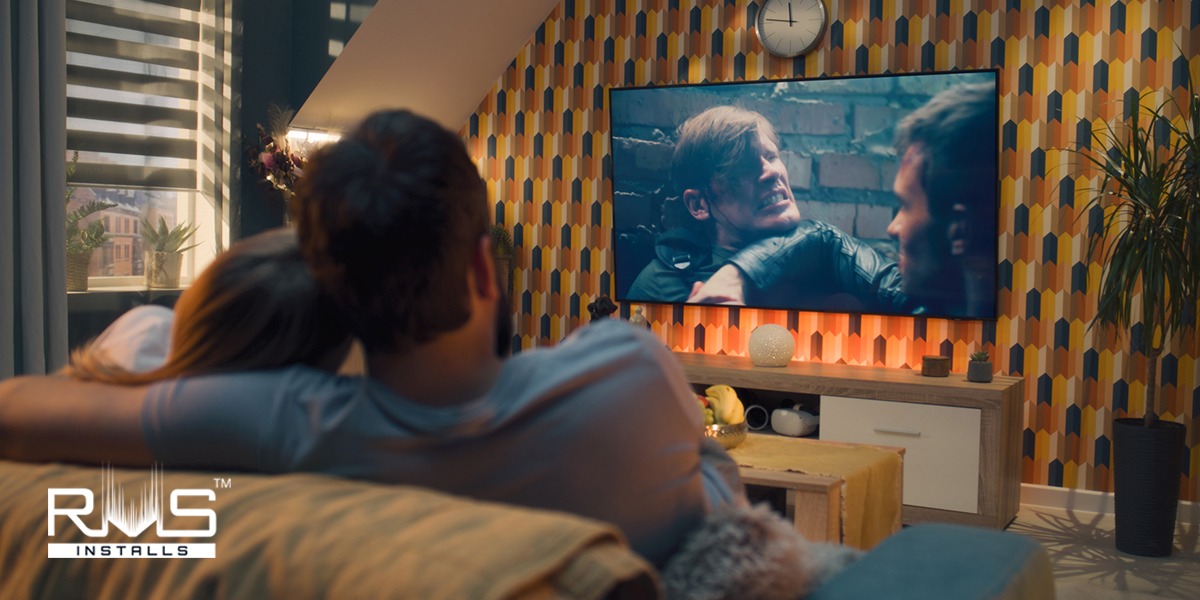
Best Subwoofer Size for Home Theater Rooms From Small to Large
Subwoofers play a key role in home theater setups. They handle low-frequency sounds below 200 Hz that regular speakers often miss. This creates deep bass for movies, music, and games. You feel vibrations from explosions or rumbles. Driver sizes range from 8 to 18 inches, which measures the speaker cone diameter. If you’re wondering what size subwoofer do I need for my home theater, consider your room size, seating distance, and the type of content you enjoy.
Subwoofer size affects output, bass depth, and control. Smaller drivers like 8-10 inches focus on precision and speed. They move less air but stay easy to control for accurate sound. Larger ones from 12-18 inches push more air. This leads to higher sound pressure levels and extension below 30 Hz. But they need strong motors to avoid distortion from heavy cones.
What Size Subwoofer Do You Need For Your Home Theater?
Subwoofers come in different driver sizes. Each impacts how they perform in your space.
Subwoofer for Small Rooms
Small rooms under 1500 cubic feet or about 250 square feet work best with 8-10 inch subs. These deliver tight punchy bass without overwhelming the area. They blend well with compact speakers. You get balanced output up to 105 dB for movies. Extension reaches 30-40 Hz. They shine in music with fast transients. But they limit max SPL in heavy bass scenes.
Subwoofer for Medium Rooms
For medium rooms from 1500-3000 cubic feet or 250-600 square feet, go with 10-12 inch drivers. These balance power and clarity. They fill the room with resonant lows down to 25 Hz. Handle dynamic movie effects while keeping music accurate. SPL hits 110-115 dB without boominess.
Subwoofer for Large Rooms
Large rooms over 3000 cubic feet or more than 600 square feet need 12-15 inch subs. For areas over 5000 cubic feet, consider up to 18 inches. These provide deep room-filling bass that reaches all seats. Output exceeds 115 dB SPL. Extension drops below 20 Hz for low-frequency effects. Heavier cones require robust amps to control movement and prevent distortion.
|
Room Size |
Best Driver Size |
Bass Characteristics |
Typical Max SPL |
|
Small (<1500 cu ft) |
8-10 inches |
Tight, punchy; 30-40 Hz extension |
100-105 dB |
|
Medium (1500-3000 cu ft) |
10-12 inches |
Full, resonant; 25-35 Hz |
110-115 dB |
|
Large (>3000 cu ft) |
12-15+ inches |
Deep, powerful; <25 Hz |
115+ dB |
Power Requirements by Room Size
Power matters for hitting reference-level bass from 105-115 dB. It ties to room size.
- Small rooms under 1500 cubic feet need 300-500W RMS for punchy bass without strain.
- Medium spaces from 1500-3000 cubic feet require 500-1000W to fill evenly at high volumes.
- Large areas over 3000 cubic feet demand 1000-2500W or more. Multiple subs help for sustained deep output.
|
Room Volume |
Recommended RMS Wattage |
Typical Peak Handling |
|
<1500 cu ft |
300-500W |
600-1000W |
|
1500-3000 cu ft |
500-1000W |
1000-2000W |
|
>3000 cu ft |
1000-2500W+ |
2000W+ |
- For a 300 square foot room with 8-foot ceilings that's about 2400 cubic feet, 400-800W RMS works well. It keeps output clean without overload.
- Open-plan areas over 1000 square feet often need 2-4 subs. This pressurizes the space evenly and controls modes. Cinematic low-frequency effects target 16-80 Hz with strong reach below 25 Hz for rumbles.
Ideal Frequency Range for Home Theaters
Subwoofers should cover 20–120 Hz to deliver deep movie effects. This includes the low rumble from the “.1” channel, like explosions or crashes. Covering up to 120 Hz ensures a smooth blend with your main speakers.
A good target is a ±3 dB response between 25–100 Hz, which avoids uneven bass. For more precise performance, aim for ±3 dB from 18–80 Hz. This lets your sub handle loud peaks up to 115 dB without interfering with midrange sounds. You can check this with simple room tests.
Some advanced subwoofers can go down to 16 Hz, letting you feel very low “subsonic” effects in movies and music.
Sealed vs Ported Enclosures
The type of subwoofer enclosure affects how bass sounds in your home theater.
- Sealed enclosures are airtight and use acoustic suspension. They give tight, fast, and accurate bass, great for music and precise effects. Bass stays even, but very low notes may be quieter.
- Ported enclosures have vents that let air move for extra resonance. This boosts volume and extends deep bass, ideal for movies. But if not tuned correctly, they can sound boomy.
- Hybrid designs combine sealed and ported benefits.
Which one to choose:
- Sealed works best in small to medium rooms (under 3,000 cubic feet) for controlled, fast bass without delays.
- Ported suits setups that want louder, deeper cinematic bass, but may lose some tightness above the port’s tuning.
Room size matters:
- Small rooms boost bass naturally but can have uneven spots.
- Large rooms need more power to fill space evenly. Bass spreads and loses energy, so multiple subs can help balance the sound.
Looking to upgrade your system? Check out our tips on optimizing multi-room audio with pre-wired speakers.
Dealing with Room Modes
Room shape can create standing waves, which make bass uneven. Some spots get too loud (peaks up to +12 dB), while others get very quiet (nulls down to -20 dB).
- Axial modes come from room length or width. You can roughly calculate them as 565 ÷ room dimension in feet = frequency in Hz. For example, a 300 sq. ft. room might have peaks at 35–50 Hz and nulls around 20 Hz.
- Tangential modes are weaker, about half the strength of axial, affecting 40–80 Hz.
- Oblique modes are even weaker, filling 25–60 Hz unevenly.
In general, axial modes dominate 20–100 Hz.
- Long rooms (~40 ft) may have nulls near 14 Hz.
- Short rooms (~12 ft) may have peaks around 47 Hz.
These room effects can distort bass. Using multiple subwoofers or digital room correction (DSP) helps make bass smoother across all listening positions.
|
Mode Type |
Frequency Calc |
300 sq ft Example Impact |
|
Axial (length/width) |
565/dim (ft) Hz |
Peaks at 35-50 Hz, nulls ~20 Hz |
|
Tangential |
~half axial |
Double peaks 40-80 Hz |
|
Oblique |
~1/√2 axial |
Fills 25-60 Hz unevenly |
Sensitivity and SPL Metrics
Sensitivity shows how loud a subwoofer plays with 1 watt of power at 1 meter. Most subs range from 85–92 dB. Higher numbers mean the sub is easier to drive, which is often the case with ported designs.
SPL (Sound Pressure Level) measures the maximum clean volume a sub can produce. Standards like CEA-2010 test bursts from 2–50 Hz. For example, a sub might hit 110 dB at 40 Hz or 105 dB at 20 Hz before distorting.
- In real rooms, you can add 3–6 dB to account for reflections.
- Long-term SPL shows how well the sub handles sustained bass.
- Short-burst SPL shows how loud peaks, like explosions, will be.
Costs by Subwoofer Size
|
Subwoofer Size |
Power / Features |
Price Range (USD) |
Details |
|
8-inch |
Basic |
$100–$300 |
Entry-level models |
|
10–12 inch |
Entry-level |
$200–$800 |
Mid-range options |
|
12–15 inch |
High-output |
$500–$2,500 |
Strong performance |
|
15-inch |
Premium |
$1,000–$5,000+ |
Advanced features, digital processing |
|
15–18 inch |
Large / High-end |
$1,000+ |
Premium materials and build quality |
How to Check Subwoofer Quality
- Frequency Response: Make sure the sub can play from 20–120?Hz evenly, staying within ±3?dB. Use swept tones or noise to check this.
- Distortion: Test with pure tones from 20–100?Hz. Keep total harmonic distortion under 3% at high volume. There should be no buzzing or muddy bass.
- Maximum Volume (SPL): Measure how loud the sub can go before it compresses. Check cone movement and listen for any port noise.
- Build Quality: A solid, well-built cabinet reduces unwanted vibrations and resonance.
- Sound Quality: Listen for tight, punchy bass in music and controlled, strong bass during movies.
For more information on sizing your home theater setup to the room, follow our detailed guide. It covers planning, wiring, speaker placement, and long-term maintenance.
FAQs
1. What size subwoofer do I need for my home theater?
People often want to know the right driver diameter and power for their room. Generally, larger rooms benefit from bigger drivers (12–15?inches+) and more power, while smaller rooms can use 8–10?inch subs without overpowering the space. Room volume, layout, and listening style (movies vs music) all affect the choice.
2. How deep should the subwoofer go (frequency range)?
A good home theater subwoofer should cover down to ~20?Hz for real cinematic rumble and effects. Many units also go up to around 120?Hz to blend with your main speakers. The deeper the bottom end, the more you feel explosions and low-frequency effects.
3. Sealed or ported — which subwoofer enclosure is best?
This is a very common question.
- Sealed enclosures give tight, accurate bass with good control. It is ideal for music or smaller rooms.
- Ported enclosures boost output at low frequencies for movies but can be boomy if not tuned right.
4. How many subwoofers should I use and where should they go?
People often ask whether to use one subwoofer or multiple. Multiple subs help smooth out room bass modes and create more even bass across seating areas. The best placement depends on room dimensions and listening positions, and sometimes room correction or DSP helps too.
5. What do sensitivity and SPL mean for a subwoofer?
Beginners often see specs like 85–92?dB sensitivity or CEA?2010 SPL ratings and don’t know what they mean. Sensitivity tells you how loud a sub plays per watt of power, and SPL ratings show how loud the sub can play before distortion. Both help compare performance between models.
6. What size subwoofer do I need for my home theater?
The right size depends on your room size, listening preferences, and content type:
- Small rooms (under 300 sq. ft.): 8–10?inch subs work well and won’t overpower the space.
- Medium rooms (300–600 sq. ft.): 10–12?inch subs provide balanced bass for movies and music.
- Large rooms (600+ sq. ft.): 12–15?inch or larger subs give deep, room-filling bass.
Conclusion
Picking the right subwoofer size transforms your home theater. It matches your room for immersive bass. Consider power enclosure and modes for best results. If you need help with home theater audio installation reach out to us at (470) 456-3108 or visit our website. We guide you through options for top performance.
Certified partners






Click Here to Fill The Form Online or Call us at:

Business Hours
| Monday | 08:00 AM - 06:00 PM |
| Tuesday | 08:00 AM - 06:00 PM |
| Wednesday | 08:00 AM - 06:00 PM |
| Thursday | 08:00 AM - 06:00 PM |
| Friday | 08:00 AM - 06:00 PM |
| Saturday | 10:00 AM - 05:00 PM |
| Sunday | (Closed) |