
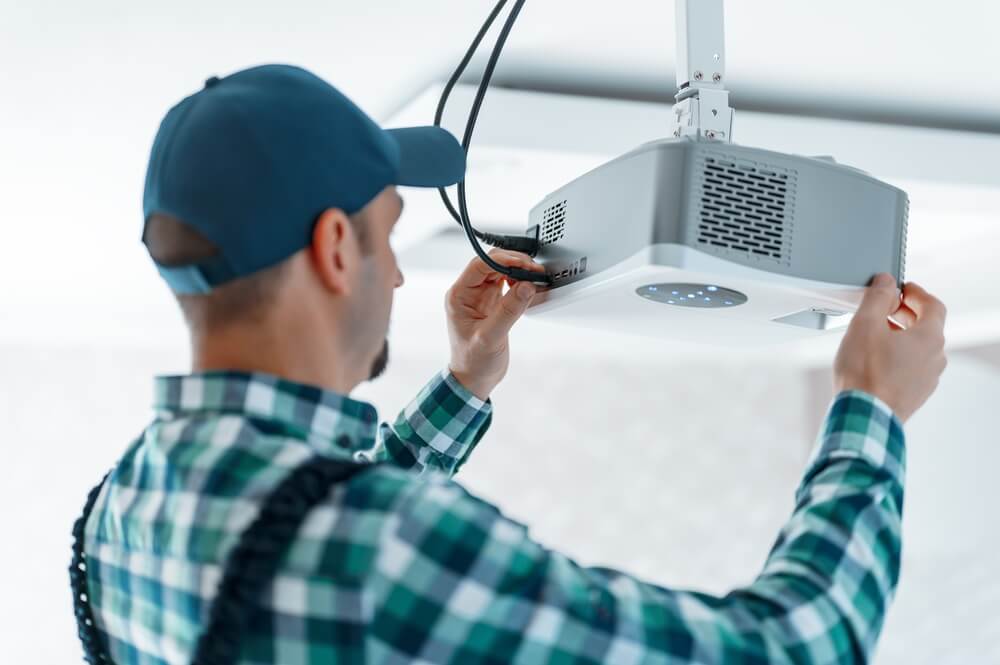
Should You Install a Home Theater Projector or Choose a TV Instead?
Table of Contents
- Introduction
- TV Vs. Home Theater Projector: What Should You Choose
- Understanding the Home Theater Projector Decision
- When a Projector vs TV Comparison Favors a Projector
- When a TV Makes More Sense Than a Projector
- Picture Quality Factors That Matter Most
- What Home Theater Installation Involves
- Best-Fit Categories at a Glance
- The Ultra-Short-Throw Projector Option
- Additional Considerations and Tips
- Final Words
- FAQs
Introduction
Many homeowners ask a simple question before upgrading their living room or media space: is a home theater projector really worth it, or should they just buy a bigger TV? The honest answer depends on the room, the lighting, and how the space gets used day to day. A home theater projector can create a truly cinematic experience, but it only works well when the room supports it. A TV, on the other hand, still wins for brightness, simplicity, and everyday convenience. This guide breaks down exactly when each option makes sense, so you can plan your setup with confidence.
TV Vs. Home Theater Projector: What Should You Choose
Understanding the Home Theater Projector Decision
A home theater projector is not simply a larger version of a television. It is a full system built around room darkness, screen size, throw distance, and a proper audio setup. Image quality depends heavily on contrast and how well the room controls outside light.
Contrast plays a bigger role than most people expect. Weak contrast makes blacks look gray instead of deep, which flattens the sense of depth that movies rely on. Even as projector technology keeps improving, most comparisons still show that televisions generally offer stronger brightness and easier day to day use.
When a Projector vs TV Comparison Favors a Projector
A projector vs TV comparison tips clearly in favor of the projector when you want a dedicated movie room or a light-controlled basement. If immersion and screen size matter most to you, a projector is usually the better investment.
Projectors make the most sense in these situations:
- You mainly watch movies at night or in a room with blackout shades.
- You are willing to add a proper screen along with a dedicated audio system.
- You want a screen size over 100 inches without buying an oversized television.
- You have a space that can be treated like a real home theater rather than a shared living room.
In the right environment, a well set up projector can feel more cinematic than even a large flat-panel display.
When a TV Makes More Sense Than a Projector
A projector is usually the wrong choice for a bright living room, especially if you often watch sports, news, or other daytime content. Ambient light reduces contrast sharply, which makes the picture look washed out and flat.
Choose a TV instead if any of these apply to your household:
- You want instant-on convenience without setup or warm-up time.
- Your room gets a lot of natural daylight throughout the day.
- You watch a mix of content, including sports and news, at different times.
- You prefer low maintenance with strong brightness in nearly any lighting condition.
Buying guides consistently stress that room control is one of the most important requirements before choosing a projector at all.
Picture Quality Factors That Matter Most
Brightness matters for any display, but contrast is usually the deciding factor once the room lights go down. A high resolution number alone does not guarantee a better movie image if the blacks look weak or washed out.
Motion handling also affects how a film actually looks on screen. Poor cadence control can make camera pans look uneven or jumpy, which pulls viewers out of the movie experience. A good home theater projector is judged by the entire image chain, not by one spec on a product page.
What Home Theater Installation Involves
Home theater installation for a projector is more involved than simply mounting a television on a wall. You need to plan for throw ratio, mounting or shelf placement, screen size, cable runs, and where the sound system components will sit.
Using a throw distance calculator is strongly recommended, since the projector model and the room geometry must match closely. Getting this wrong can lead to a distorted image or a screen size that does not fit the space properly.
Key installation factors to plan ahead of time include:
- Throw distance between the projector and the screen.
- Ceiling height and mounting options, or shelf placement if ceiling mounting is not possible.
- Screen material and size based on seating distance.
- Cable routing for power, video, and audio connections.
- Speaker and subwoofer placement for a balanced sound experience.
Looking to build a home theater? Read our beginner's guide to home theater setup
Best-Fit Categories at a Glance
|
Use Case |
Better Choice |
Why It Works |
|
Dedicated dark theater room |
Projector |
Best immersion and largest possible image |
|
Bright family room |
TV |
Stronger brightness and everyday convenience |
|
Large image near a console wall |
Ultra-short-throw projector |
Easier placement without a long throw |
|
Budget movie room |
Projector |
Cost-effective when the room stays dark |
|
Daily mixed-use viewing |
TV |
Easier to use, brighter, less fussy overall |
The Ultra-Short-Throw Projector Option
An ultra-short-throw projector solves one of the biggest complaints people have about traditional projectors, which is the long throw distance and ceiling mount requirement. These units sit close to the wall or screen, similar to a console placement, which reduces cable clutter and installation hassle.
That said, ultra-short-throw models are their own category with different trade-offs and pricing. They are worth considering if you want a big-screen effect without a permanent ceiling mount or a long cable run across the room.
Additional Considerations and Tips
Before making a final decision, think honestly about how your room gets used across a normal week, not just during a movie night. A space that doubles as a home office or playroom during the day may not be a good fit for a projector, even if evenings are dark.
A few practical tips worth keeping in mind:
- Test your room lighting at the time of day you will actually watch content most often.
- Budget for a proper screen and audio system, not just the projector unit itself.
- If you are unsure, start with blackout shades in your current room before committing to a full theater build-out.
- Professional installation helps avoid throw distance and mounting mistakes that are costly to fix later.
Final Words
Choosing between a home theater projector and a TV depends on your room, budget, and viewing habits. A dedicated, dark space can benefit from a projector’s cinematic feel, while a bright, multipurpose room often works better with a TV.
RMS Installs home theater projector installation experts help homeowners and businesses create the right entertainment setup, TV mounting, audio systems, and smart home solutions. Our team designs custom AV systems based on your space, ensuring the right equipment and setup for the best viewing experience. For expert AV and smart home guidance, contact RMS Installs at (470) 456-3108.
FAQs
Is a home theater projector better than a TV for movies?
A projector usually creates a more cinematic feel in a dark, dedicated room, since it can produce a much larger image than most televisions while keeping strong contrast when light is controlled properly.
How much room darkness does a projector actually need?
Projectors perform best with little to no ambient light, since brightness from windows or lamps reduces contrast and makes the picture appear washed out, flat, and less detailed overall.
What screen size can a home theater projector produce?
Depending on the model and throw distance, a projector can typically produce images from around 100 inches up to 150 inches or more, far larger than most standard televisions.
Is home theater installation for a projector more complicated than a TV?
Yes, projector installation involves more planning, including throw distance, mounting or shelf placement, screen selection, and audio wiring, while TV installation is generally simpler and faster to complete.
Do ultra-short-throw projectors need a ceiling mount?
No, an ultra-short-throw projector sits close to the wall or screen, similar to console placement, which removes the need for a long throw distance or a permanent ceiling mount.
Can a projector work well in a bright living room?
Not usually, since ambient light significantly reduces contrast and picture quality, which is why bright, multipurpose rooms are generally better suited to a television instead.
Does a higher resolution projector always mean a better picture?
Not necessarily, since contrast, motion handling, and room lighting all affect image quality just as much as resolution, so a high number alone does not guarantee a better movie experience.
What is more important for movies, brightness or contrast?
In a dark room, contrast usually matters more than raw brightness, since strong contrast creates deeper blacks and a greater sense of depth in movie scenes.
Do projectors need a separate sound system?
Most home theater projectors benefit from an added sound system, since built-in speakers are often limited and cannot deliver the full impact expected from a true cinematic setup.
Should I hire a professional for home theater installation?
Professional installation helps avoid common mistakes with throw distance, mounting, and cable routing, which can be costly to fix later if the projector and room geometry do not match properly.
Certified partners






Click Here to Fill The Form Online or Call us at:

Business Hours
| Monday | 08:00 AM - 06:00 PM |
| Tuesday | 08:00 AM - 06:00 PM |
| Wednesday | 08:00 AM - 06:00 PM |
| Thursday | 08:00 AM - 06:00 PM |
| Friday | 08:00 AM - 06:00 PM |
| Saturday | 10:00 AM - 05:00 PM |
| Sunday | (Closed) |