
How to Build the Perfect Outdoor Entertainment System: Audio, Video, Lighting, and Smart Control
Table of Contents
- Introduction
- What a Complete Outdoor Entertainment System Actually Includes
- Outdoor Audio: Getting the Sound Right
- Outdoor Video: TVs, Projectors, and Smart Screens
- Smart Lighting for Outdoor Spaces
- Smart Integration: Controlling Everything From One Place
- Installation and Setup Best Practices
- Additional Tips to Consider
- Conclusion
- FAQs
Introduction
Spending time outdoors in the evening hits differently when your space is set up the right way. Whether you are hosting a backyard game night or relaxing by the pool, a well-planned outdoor entertainment system can completely change how you use your outdoor space. The key is combining weatherproof audio, video, lighting, and smart controls into one system that works together. This guide walks you through every major component you need to make that happen.
What a Complete Outdoor Entertainment System Actually Includes
A fully integrated outdoor setup is more than just a TV on a patio. A proper system includes several layers working together:
- Distributed outdoor audio across multiple zones
- A weather-rated video display or projector setup
- Layered smart lighting for ambiance and safety
- A central smart home control hub
- Reliable outdoor Wi-Fi for seamless streaming
High-end installers typically treat the outdoor space as an extension of the home's existing smart system. That means your pool, patio, fire pit, and outdoor kitchen all connect to one platform that you manage from a single app or touchscreen panel.
Outdoor Audio: Getting the Sound Right
Most homeowners invest in great indoor audio and then settle for a basic portable speaker outside. That gap does not have to exist. A quality outdoor audio setup is fully achievable with the right planning.
Landscape Speakers and Subwoofers
Weather-rated landscape speakers can be installed as satellite speakers in garden beds, surface-mounted on walls, or even disguised as rocks near pool areas. Speakers are typically spaced about 12 to 15 feet apart for even sound coverage. Buried subwoofers deliver deep bass that most people assume you simply cannot get outdoors.
All quality outdoor speakers are built to handle heat, cold, humidity, and rain, so longevity is not a concern when you choose the right hardware.
Audio Zoning
One of the biggest advantages of a professional outdoor audio setup is zoning. You can assign separate volume levels and even separate music sources to different areas:
|
Zone |
Example Use |
|
Pool area |
Upbeat playlist for kids and guests |
|
Patio / dining area |
Background music during dinner |
|
Fire pit or side yard |
Ambient or relaxed listening |
|
Outdoor kitchen / bar |
Game audio or party music |
Each zone runs independently so one part of your yard does not have to match another.
Amplifiers and Control
Amplifiers are mounted in weatherproof cabinets near the house. You can control sources through streaming platforms and manage everything through a connected app or voice command via Alexa, Google Assistant, or Siri, depending on the platform you use.
Outdoor Video: TVs, Projectors, and Smart Screens

Bringing a standard indoor TV outside is a mistake that many homeowners make. Indoor TVs are not built for humidity, direct sun exposure, or heat fluctuations. They fail faster and can become a safety hazard in high-temperature environments.
Outdoor-Rated TVs
Purpose-built outdoor TVs offer high brightness ratings that keep the picture sharp even in direct sunlight. They are also rated for UV exposure, moisture, and temperature swings. Common installation placements include:
- Under a pergola or covered patio
- Inside a stone-faced cabinet
- On a motorized lift that lowers the TV into a countertop when not in use
Screen sizes in the 65 to 85 inch range are common for backyard setups. Anti-glare coatings and automatic brightness adjustment keep the image clear as outdoor light changes throughout the day.
Projector and Screen Setups
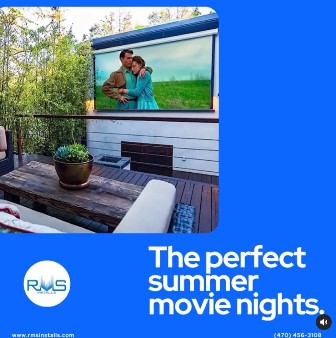
For a true movie-night experience, a projector with a 100 to 120 inch outdoor screen creates something a TV simply cannot match. The projector is mounted inside a covered soffit or eave, and the screen can be fixed or motorized. The media source sits inside the home and feeds the projector through proper weatherproof cabling.
Smart scenes like "Movie Night" can automatically lower motorized patio shades, dim the lights, and turn on the projector with a single tap.
Smart Lighting for Outdoor Spaces
Lighting does more than help people see at night. It sets the mood, highlights the landscaping, and makes your outdoor space feel like an intentional design rather than an afterthought.
Types of Outdoor Lighting
A layered approach works best:
- Path and safety lighting: LED path lights and step lights placed 6 to 10 feet apart along walkways and stairs
- Accent lighting: Uplights on trees, columns, or stone walls, and downlights from pergola beams
- Ambient lighting: String lights or LED strips under deck structures
- Task lighting: Under-counter lights at the outdoor kitchen or bar area
Automation and Scenes
Smart lighting systems let you program behaviors so the lights respond automatically. Common setups include:
- Lights turning on at sunset or when motion is detected
- Pre-set scenes like "Dinner Mode" (soft warm lighting), "Party Mode" (brighter, more vibrant), and "Movie Night" (lights dimmed low)
Integrated platforms allow the lighting to work together with your audio and video systems so one tap on your phone activates a fully coordinated outdoor experience.
Smart Integration: Controlling Everything From One Place

The real advantage of a modern outdoor entertainment system is unified control. Every system, your TV, audio zones, lights, pool, and even outdoor heaters, connects to a single platform.
Control Options
|
Method |
What It Controls |
|
In-wall or tabletop touchscreen |
All AV, lighting, climate, and security |
|
Mobile app |
Volume, source, lighting scenes, and zones remotely |
|
Voice command |
Music playback, lighting, and scene activation |
Common Smart Scenes
- Game Day Mode: Bright TV, louder audio, bar lights on
- Movie Night Mode: Projector on, lights dimmed, audio balanced for film
- Pool Party Mode: Pool lights active, upbeat music, outdoor heaters or misters on
- Dinner Mode: Soft background music, warm low lighting
These scenes make the whole system easy to use, even for guests who are not familiar with the setup.
Supporting Systems
A complete setup also connects to:
- Pool and spa automation (pumps, waterfalls, underwater lighting)
- Security cameras and video doorbells
- Motorized patio shades for sun and weather control
- Outdoor radiant heaters to extend comfortable use into cooler months
- Outdoor Wi-Fi access points for stable streaming throughout the property
Installation and Setup Best Practices
Getting the physical setup right matters just as much as choosing the right equipment.
- Seating should face the TV or screen, with no direct sun in the viewer's eyes
- Speakers should flank the TV for stereo sound or form a perimeter ring around the seating area
- Amplifiers, switches, and network gear should go inside NEMA-rated weatherproof enclosures
- All wiring should run through outdoor-rated conduit, using CAT-6 for control signals and proper gauge speaker wire
- Dedicated GFCI-protected outlets and outdoor circuits should be planned from the start
- A dedicated outdoor Wi-Fi access point or mesh node keeps streaming and control reliable
Avoid running a single speaker wire throughout the entire system. Proper zoning requires separate runs and the right amp configuration for each area.
Read our ultimate outdoor entertainment guide to plan the perfect backyard setup
Additional Tips to Consider
- Phase your upgrades: You do not have to build everything at once. Starting with audio, basic lighting, and outdoor Wi-Fi gives you a solid foundation. Video and full automation can be added later.
- Do not skip weather-rated components: Even in covered outdoor areas, temperature swings and humidity affect performance over time.
- Plan for comfort, not just entertainment: Motorized shades and outdoor heaters significantly extend how often and how long you actually use the space.
- Keep the Wi-Fi strong: Streaming issues and control delays usually trace back to a weak outdoor network. A dedicated weatherproof access point is not optional for a reliable system.
Conclusion
Building an outdoor entertainment system that truly works takes more than buying a TV and a Bluetooth speaker. It takes planning the right zones, choosing weather-rated components, and connecting everything to a smart control platform that makes it all easy to use. When done right, your backyard becomes a real extension of your living space that you use year-round. We at RMS Installs have helped many homeowners across the Atlanta, GA area with outdoor entertainment installation services that deliver on every level. If you are ready to get started or just want some guidance, give us a call at (470) 456-3108.
FAQs
What makes an outdoor TV different from a regular indoor TV?
Outdoor TVs are built to handle UV exposure, humidity, extreme heat, and rain. They also have much higher brightness ratings so the picture remains visible even in direct sunlight.
How many speakers do I need for a complete outdoor audio setup?
This depends on your space, but a typical backyard setup uses 6 to 8 landscape speakers along with one or two buried subwoofers. Speakers are usually placed 12 to 15 feet apart for consistent sound coverage.
Can I control my outdoor entertainment system from my phone?
Yes. Most professional outdoor systems connect to a central platform that offers a dedicated mobile app. You can adjust audio zones, switch video sources, control lighting scenes, and more from anywhere.
What is audio zoning and do I really need it?
Audio zoning lets you assign different volume levels and music sources to different areas of your yard. If you want the pool area playing something different from the dining area, zoning makes that possible. It adds real flexibility and is worth including.
Do I need a separate Wi-Fi access point outside?
Yes. A dedicated outdoor weatherproof access point ensures reliable streaming and smart control throughout your outdoor space. Relying on your indoor router signal usually leads to buffering and control delays.
Can I add smart lighting to my existing outdoor setup?
In most cases, yes. Smart lighting systems can integrate with existing landscape lighting or replace it. The right platform will depend on what smart home system you already have in place.
What is the difference between a motorized TV lift and a standard outdoor TV mount?
A standard mount keeps the TV visible at all times. A motorized lift conceals the TV inside a cabinet or countertop and raises it when needed. Lifts give the space a cleaner look and add an extra layer of weather protection when the TV is not in use.
How do pre-set scenes like "Movie Night" actually work?
A smart control platform lets you program a scene that triggers multiple devices at once. Selecting "Movie Night" might dim the lights, lower motorized shades, turn on the projector, and set the audio to a cinema-friendly level, all with a single tap.
Is it possible to connect outdoor speakers to the same system as my indoor speakers?
Yes. Platforms like Control4, Crestron, and Savant allow you to run the same music from inside the house to your outdoor zones or play completely different content in each area.
How do I protect outdoor AV equipment from weather damage?
Amplifiers, switches, and network gear should be stored in NEMA-rated weatherproof enclosures. All cables should run through outdoor-rated conduit, and hardware should be rated for UV exposure, temperature extremes, and humidity.
Certified partners






Click Here to Fill The Form Online or Call us at:

Business Hours
| Monday | 08:00 AM - 06:00 PM |
| Tuesday | 08:00 AM - 06:00 PM |
| Wednesday | 08:00 AM - 06:00 PM |
| Thursday | 08:00 AM - 06:00 PM |
| Friday | 08:00 AM - 06:00 PM |
| Saturday | 10:00 AM - 05:00 PM |
| Sunday | (Closed) |